




For many, the image of a dairy farm centers on the milking parlor. But the true foundation of a sustainable and ethical dairy operation begins much earlier—in the calving pen and the calf nursery. The first 60 days of a calf’s life are a critical window that determines its future health, welfare, and productivity. Today, we’ll explore the appropriate, humane birthing and weaning practices that forward-thinking dairy farmers employ, ensuring every calf gets the best possible start.
Part 1: A Safe and Supported Birth
The birthing process, or parturition, sets the stage for everything that follows. Modern humane practices focus on minimizing stress and intervention while providing vigilant support.
The Pre-Birth “Dry Period:
It all starts with the mother cow, the dam. During the last two months of her pregnancy, she is given a “dry period” where she is not milked. This allows her body to channel energy into the developing calf and rebuild her own reserves. She is moved to a clean, comfortable, and spacious maternity pen—often bedded deeply with straw or sand—away from the main herd. This separation reduces competition and allows for close monitoring.
The Golden Rule: Let Nature Take the Lead, But Watch Closely:
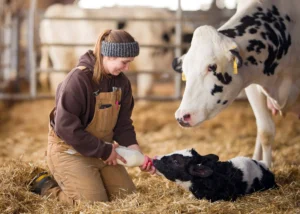
Farmers are trained to recognize the stages of labor. The goal is to allow the cow to give birth unassisted, which is less stressful for both mother and calf. However, trained staff monitor the process discreetly. If labor progresses normally for an hour with no advancement, or if the cow shows signs of distress, a veterinarian or trained herdsperson may intervene to assist. This balance respects the natural process while prioritizing animal welfare.
Immediate Post-Birth Care:
Once the calf is born, the focus shifts swiftly. The airways are cleared to ensure the calf is breathing. The navel is dipped in a chlorhexidine or iodine solution to prevent infection—a simple, vital step. The calf is then moved to a clean, dry area and vigorously rubbed down with straw or towels to stimulate circulation and dry it off, preventing hypothermia. Importantly, during this time, the dam is often given the opportunity to lick and bond with her calf, which is a natural behavior that helps stimulate the calf.
Part 2: The Colostrum Imperative
This is arguably the most critical practice in calf rearing. **Colostrum** is the dam’s first milk, thick and rich with antibodies (immunoglobulins). A newborn calf is born with no immune defense; colostrum provides this passive immunity.
The 3-Q Rule: Quality, Quantity, Quickness:
Quality: Farmers often test colostrum with a refractometer to ensure it has a high concentration of antibodies.
Quantity: The goal is to feed 10-12% of the calf’s body weight in colostrum within the first 12 hours. For a 90-pound calf, that’s about 4.5 liters, typically split into two feedings.
Quickness: The calf’s ability to absorb these large antibody molecules drops dramatically after 24 hours. The first feeding should happen within the first two hours of life. This timely, measured feeding is a non-negotiable cornerstone of humane calf care.
Part 3: Housing and Early Nutrition
After bonding and colostrum feeding, calves are typically moved to individual or small-group housing. Individual pens (hutches or indoor pens) prevent disease transmission and allow farmers to monitor each calf’s intake and health closely. These must be clean, dry, well-ventilated, and offer ample space for the calf to stand, turn around, and lie down comfortably.
Moving to Milk Replacer or Whole Milk:
For the next several weeks, the calf is fed a milk-based diet. This can be high-quality milk replacer (formulated for optimal digestibility and growth) or pasteurized waste milk from the farm. Pasteurization is key here, as it kills pathogens without losing nutritional value. Calves are fed twice daily, from a nipple bottle or bucket, ensuring they consume enough to support rapid growth and development.
The Importance of Starter Grain:
From as early as three days old, calves are offered fresh water and a highly palatable calf starter grain. This encourages rumen development. The rumen is the first stomach chamber, and for it to grow and develop the necessary microbiome, it needs solid feed. This early access to grain is the essential first step toward weaning.
Part 4: The Weaning Process: Gradual and Low-Stress
Weaning is not an event, but a process. Abrupt separation and cessation of milk are highly stressful and can lead to sickness and stunted growth. Humane weaning is gradual and based on the calf’s development, not just its age.
The Metric That Matters:
Starter Intake. The primary signal for weaning readiness is the calf’s consumption of solid food. A common benchmark is when a calf consistently eats at least 2 pounds (approx. 1 kg) of starter grain per day for three consecutive days. This indicates its rumen is sufficiently developed to derive nutrients from solid feed.
Step-Down Weaning:
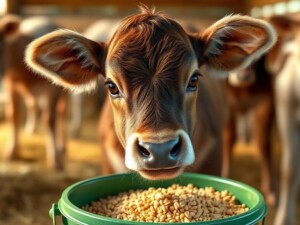
Instead of stopping milk abruptly, farmers often use a “step-down” method. This might involve reducing from twice-a-day feeding to once-a-day feeding for a week, then reducing the volume offered, before stopping milk entirely. This gentle transition gives the calf’s digestive system time to adapt.
Health and Growth Monitoring:
Throughout the weaning process and for several weeks after, calves are closely watched for any signs of weight loss, lethargy, or illness. Their growth is often tracked to ensure they continue on a positive trajectory.
The Bigger Picture: Why These Practices Matter
Appropriate birthing and weaning are more than just checklists; they are ethical and economic imperatives.
Animal Welfare:
Reducing stress, preventing illness, and meeting the behavioral and nutritional needs of calves is simply the right thing to do. A healthy, low-stress start leads to more resilient, content animals.
Long-Term Herd Health:
A calf that receives excellent colostrum and avoids early-life scours (diarrhea) will have a stronger immune system for life. She is more likely to enter the milking herd on time, be more productive, and have fewer health issues.
Farm Sustainability:
Healthy calves mean lower veterinary costs, reduced use of antibiotics, and lower calf mortality rates. It also means a more reliable pipeline of replacement heifers for the herd, ensuring the farm’s future.
Conclusion
The journey from birth to weaning on a modern dairy farm is a carefully choreographed dance of science, observation, and compassion. By prioritizing a safe birth, immediate colostrum, clean housing, nutritious feeding, and a gradual weaning process based on individual development, farmers are investing in the well-being of each animal and the long-term vitality of their herd. It’s a powerful demonstration that the highest standards of animal care and responsible farming go hand-in-hand, ensuring that every calf has the opportunity to thrive.